
'After All, Tmorrow is Another Day!'
When Scarlett O’Hara spoke those last words in the movie, “Gone With The Wind”—“After all, tomorrow is another day,”— we were not ready for the movie to end. And of course, Rhett’s last shocking words in the scene before that was, “Frankly, my dear, I don’t give a___!” It may have been the first curse word to ever be spoken in a movie.
“Gone With The Wind” is certainly one of my favorite movies of all time. I bought the Anniversary Edition DVD a few years ago when they said that because of the racial content they would not show it on TV again.
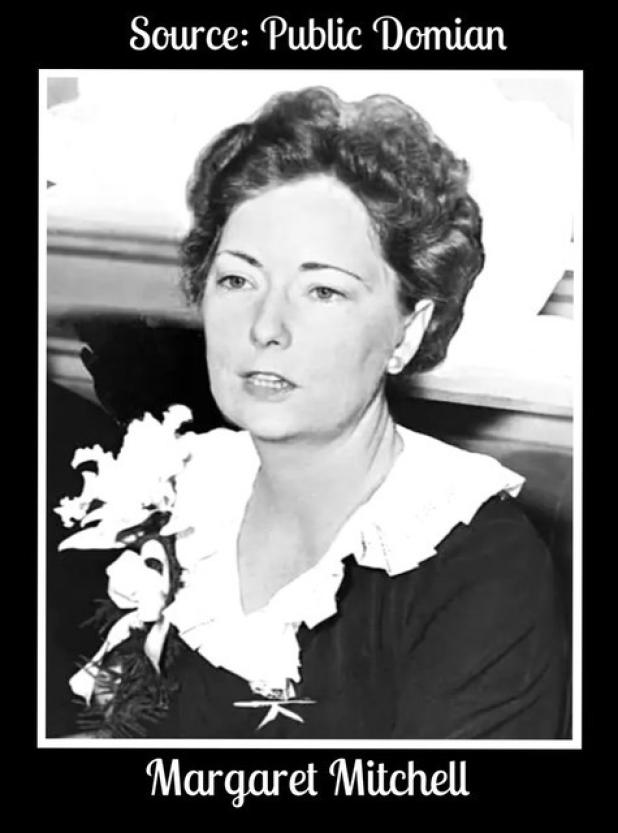
Margaret Mitchell, the author of the Pulitzer Prize winning book, “Gone With the Wind,” was a journalist, not a writer of novels. But, in 1926 she found herself confined to home in Atlanta with a painful ankle injury. With nothing else to do she drove her husband crazy going to the library to bring home books for her to read.
Her husband encouraged her to write a book, instead of reading them all day every day. That started her thinking about the stories she had heard from relatives about the Civil War and Reconstruction.
The war was over long before Margaret was born, yet its echoes lingered in those family conversations about the ruins of old plantations, and the pride and pain woven into southern identity.
Margaret didn’t begin with the intention of writing a masterpiece. In fact, she started slowly, and for years the manuscript remained a secret project—something she worked on quietly.
The character of Scarlett O’Hara slowly took shape—a headstrong Southern girl who refused to be crushed by war or poverty. Plantation houses rose on the page. Atlanta burned.
Soldiers marched, and families were shattered and rebuilt their lives from ashes.
She wrote about survival, stubbornness, love, loss, and the rebuilding and transformation of a society turned upside down. It took nearly a decade before Margaret allowed anyone in the publishing world to see the manuscript. When the novel was finally published in 1936, it became an immediate sensation, and sold millions of copies. Three years later, its film adaptation, “Gone with the Wind,” would become one of the most iconic movies in cinema history.
Margaret never published another book. Although she had started a manuscript, it was never finished before her death in 1949.