

Gaming Offers New Way to Reach Veterans
This past weekend, January 30 through February 1, I traveled to Austin, Texas to attend the American Legion Department of Texas Mid-Winter Convention and Department Executive Committee (DEC) meeting. During the convention, we heard reports from chairmen across a wide range of programs, including Americanism, Veterans Affairs & Rehabilitation, Finance, and several others.
One of the highlights for me personally was the opportunity to present the report for our Ad Hoc Committee on Esports and Video Gaming within the American Legion. I was appointed to this committee last year during the Department of Texas Convention by Department Commander Rich Huntly. Our mission has been to explore the possibility of bringing esports and video gaming on as an official program of the American Legion.
Over the past several months, our committee has researched studies and data showing how younger veterans often turn to gaming as a way to connect with peers and how gaming has helped many veterans cope with PTSD. This is something I deeply understand as both a veteran and a gamer myself.
When you serve in the military, you build a bond with those beside you that is hard to replicate in civilian life. You trust the person next to you with your life, knowing you would do the same for them without hesitation. Interestingly, when veterans connect online through gaming, especially with other veterans, that sense of bond often returns. There is comfort, familiarity, and understanding. Veterans share a common language: dark humor, attention to detail, shared sacrifice, and unspoken experiences.
This understanding also sheds light on why many traditional veteran organizations are struggling. For generations, places like the American Legion and the VFW served as gathering spots where veterans could connect without having to explain themselves. Many World War II and Vietnam-era veterans didn’t talk openly about their feelings or PTSD, but they found peace simply being around others who understood what they had been through.
As those generations fade, so too do the organizations that once served them so well. Younger veterans simply aren’t drawn to sitting in an old bar. Many who returned from Iraq and Afghanistan have never stepped inside an American Legion post. Yet, their need for connection with fellow veterans is just as strong as it ever was.
That’s where esports and video gaming come in.
Across the country, American Legion and VFW posts are already creating dedicated gaming rooms equipped with high-end gaming PCs and consoles like PlayStation and Xbox. These spaces provide veterans with a welcoming environment where they can connect, compete, and rebuild that sense of camaraderie.
The report I presented addressed these efforts and emphasized the need for the American Legion Department of Texas to formally recognize esports gaming as an official program. Doing so would expand opportunities, open doors to new partnerships, and help legitimize video gaming as a valuable tool in veteran recovery and wellness.
One standout example comes from California, where “American Legion Gaming” has already made significant progress. Recently, they completed a $20,000 gaming room installation at a VA hospital in Palo Alto, California. Efforts like this show the incredible potential of gaming as a positive force for veterans.
Our goal is to expand upon this momentum and establish American Legion Gaming as a Department-level program here in Texas. The next major step will take place at the Department of Texas Convention in July, where we hope to receive final approval to make American Legion Gaming an official program statewide.
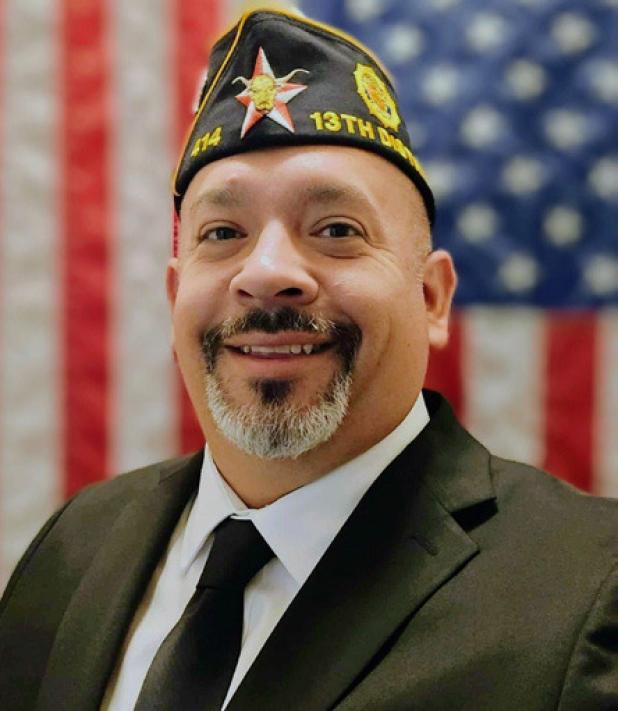
For God and Country, Chris Garcia Commander, Post 414, Olney Commander, 13th District, American Legion Department of Texas