
Olney County Club Looks to Roots For Latest Upgrades
The road leading into the Olney Country Club may soon carry a new name — one that reaches back nearly a century.
The Olney City Council, working with the Olney Recreation Association, has begun the process of renaming Bankhead Drive to Leberman Lane, a tribute to one of the founding families whose land made the country club possible and whose legacy continues to shape it today. The proposal is expected to be finalized in May.
“The board has long wanted to find a meaningful way to honor (the Leberman)
family for their generous donation of 100 acres for the golf course back in the 1960s,” said ORA President Landon Rowe. “We felt this was the right time.”
The gesture comes at a moment when the country club itself is undergoing its most significant transformation in decades, thanks to continued support from local donors..
Since 2021, more than $850,000 has been invested into the course and its facilities, part of a sustained effort to revive a space that has long served as both a recreational outlet and a gathering place for the community.
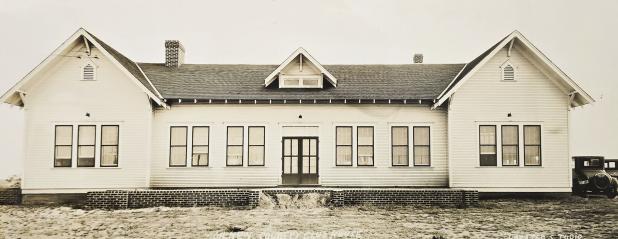
Where it started Golf was being played on the land outside Olney as early as the 1920s, but from the beginning, the country club was as much a social center as it was a place to play. The long wooden clubhouse was a social center as far back as the 1920s.
The Olney Enterprise reported on a spring evening in 1928, when members and guests gathered at the clubhouse for a dance featuring the Moonlight Syncopators. As the sun went down, a supper of sandwiches was served — and the evening gave way to music and conversation. Guests played “42” at card tables, while others performed saxophone and piano solos.
By the time Garry Black began playing golf there as a boy around 1960, it was still in use — weathered but functional.
“There was a golf course that was there and it had a little smaller type… wood building clubhouse thing,” Mr. Black recalled.
“A few tables and chairs that the guys would sit down around… probably would bring in a cooler of beer,” he said. There was no formal check-in to play a round of golf, no staff overseeing play. Instead, the course operated on trust.
“There was a little box there by the first tee… you could stick whatever… the fee was in that little box,” Mr. Black said.
What the course looked like The course itself bore little resemblance to what exists today, he said.
Fairways ran in different directions. Holes followed a layout that has since been erased. The water feature that now defines the opening stretch of the course had not yet been built.
“The golf course was… a completely different routing,” Mr. Black said.
What he remembered quite clearly were the greens. “When I first started playing, the greens were sand,” he said.
Each green came with a rake. Before putting, players would smooth a path across the surface, dragging the rake behind them to level footprints and irregularities.
“You would drag it from where your ball was to the hole… so you had a smooth path,” Mr. Black said.
Keeping those greens playable required ingenuity. Without irrigation and with little water available, grass would not hold.
“They would go out there and spray ’em with like diesel… so it wouldn’t just be blowing around,” he said.
The rest of the course reflected those same limitations — sparse grass, minimal watering, and maintenance handled largely by the people who used it.
“It was pretty bare… there was no way to water,” he recalled.
Built by the community In those early years, the country club functioned less as a formal organization than as a shared effort.
“There wasn’t… an organization like there is now,” Mr. Black said.
Local golfers kept the course going, handling maintenance as best they could and relying on an honor system to cover costs.
“It was… kind of run as a volunteer type, municipal-type golf course,” he said.
That approach carried the club through its early decades, but by the mid-1960s, it became clear that something more structured would be needed to sustain it.
A turning point in the 1960s The formation of the Olney Recreation Association marked a turning point.
In 1966, the organization secured a $206,000 loan from the Farmers Home Administration to rebuild the course and expand recreational facilities. Plans were hashed out in meetings at the No-D-Lay Restaurant, where board members gathered with architects and engineers to shape what the next version of the club would become, according to stories in the Newcastle and Olney newspapers.
The transformation would be substantial.
A new clubhouse replaced the wood- A new clubhouse replaced the wooden structure. A swimming pool and tennis courts were added. The course was redesigned, with irrigation installed and grass greens established.
“That’s when they built what’s there now… the buildings, the golf course… the swimming pool, everything,” Mr. Black said.
The changes reshaped the club into a more permanent fixture — one that could serve the community not just informally, but as an organized recreational center.
Maintaining the course Even after the rebuild, maintaining the course remained a hands-on effort.
Mr. Black recalled working as a teenager, helping manage an irrigation system that required constant attention and manual labor.
“You just kind of had to go out there and stick it in… and turn it on,” he said.
The work often took place at night, moving sprinkler heads from one location to another, adjusting water flow, and dealing with whatever came with it.
“A lot of times there might be a tarantula there,” he said.
And sometimes, things went wrong.
“You’d turn it… and all of a sudden it would come loose and it’d blow up in your face,” he said.
Renewal in the present For decades, the club changed gradually, shaped by available resources and steady use.
That began to shift in 2021, after Olney and the world emerged from the shutdowns of the covid pandemic.
Since then, the Olney Recreation Association has invested heavily in the course, undertaking improvements that echo — in scale, if not in circumstance — the rebuild of the 1960s.
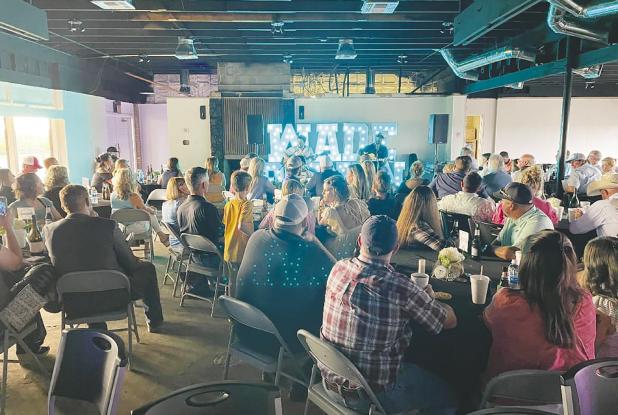
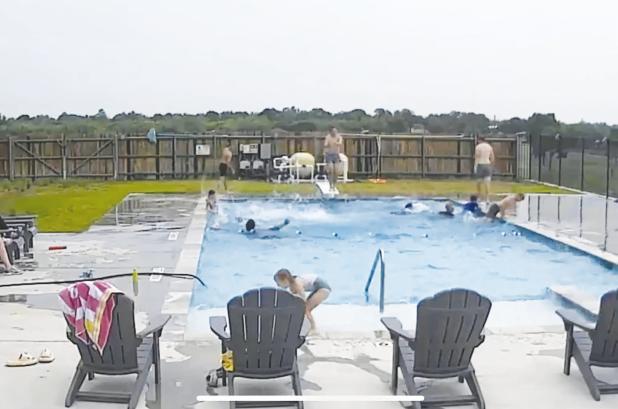
A new swimming pool has replaced the old one. A modern irrigation system now covers the course. Cart paths have been paved, with three new bridges added. Inside the clubhouse, the ballroom has been renovated with new flooring, ceilings, and air conditioning.
Additional work is underway or planned, including completing cart paths, installing a new slab at the driving range, and renovating the tennis courts into a multi-use facility for tennis and pickleball.
“If we can complete the tennis court renovations, we look forward to partnering with the athletic department to help bring high school tennis back,” Mr. Rowe said.
Support has come from across the community.
“We’ve been fortunate to receive support from individuals and businesses such as Carla Perry, Mace and Celeste McClatchy, Air Tractor, Tower Extrusions, The Perry Foundation, and CEMCO,” Mr. Rowe said. “They believe in the direction the club is heading.”
Looking ahead The improvements are already changing how the course is used.
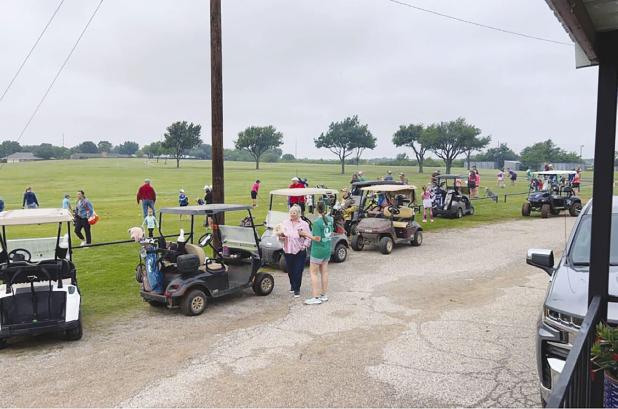
This year, the Olney Country Club hosted the first day of district golf competition — a step that required sustained effort to meet the standards needed to bring tournament play back to town.
“It was a hard-fought battle to bring district play to Olney,” Rowe said.
Further enhancements may follow. Golf course architect Trey Kemp recently visited to evaluate the addition of bunkers and practice areas, part of an effort to continue improving the course.