
Cowboys and Texas Cattle Trails
We all remember that great movie, “The Cowboys” starring John Wayne. We have not lived in the cattle drive era, but old movies have given us some understanding of the life that cattle drovers endured while living in the saddle and sleeping on the ground for many weeks at a time.
Recently, we traveled north from San Antonio along the western route on our way home. Along the way, we stopped at an historical marker telling the history of the Great Western Cattle Trail that was a chosen route in that west Texas area.
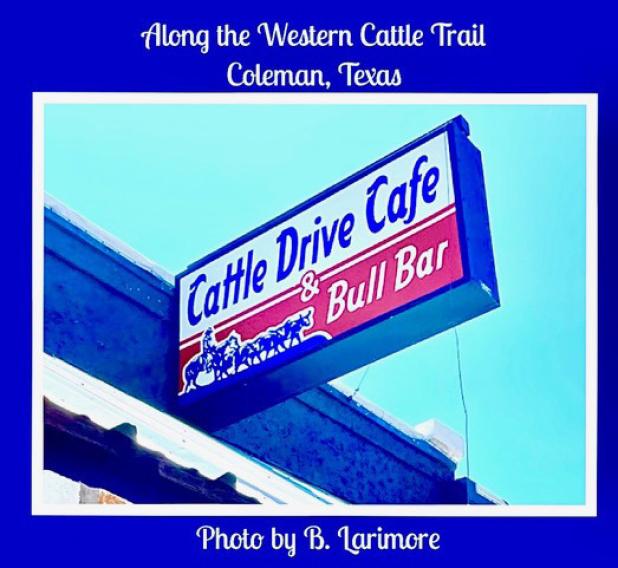
We planned to stop for lunch in Coleman. Not knowing anything about Coleman, I searched on my phone for a place to eat. I found the Cattle Drive Cafe in downtown Coleman with a great all-around menu, and a theme relating to West Texas and the history of the Great Western Cattle Trail.
Since I did not make notes at the historical marker about the Great Western Cattle Trail, I looked up the history of all the Texas cattle trails—and there were many.
A familiar trail was the Goodnight-Loving Trail. It was portrayed in the well-known TV series, “Lonesome Dove.” And there was the Western Trail—also known as the Great Western Cattle Trail, Dodge City Trail, and the Fort Griffin Trail. It ran west of, and roughly parallel to, the better- known Chisholm Trail into Kansas, reaching an additional major railhead there for shipping beef to Chicago. Longhorns and horses would continue further north by trail to stock open-range ranches in the Dakotas, Wyoming, Montana, and into Canada.
By 1879, the Great Western Cattle Trail was the principal thoroughfare for Texas cattle bound for northern markets. Note: Although rail lines already existed in Texas, high freight prices for stock continued to make it more profitable to drive cattle north to the major east-west lines in Kansas. That may be more than you ever wanted to know about the Texas cattle trails—but now you know. God Bless Texas!