
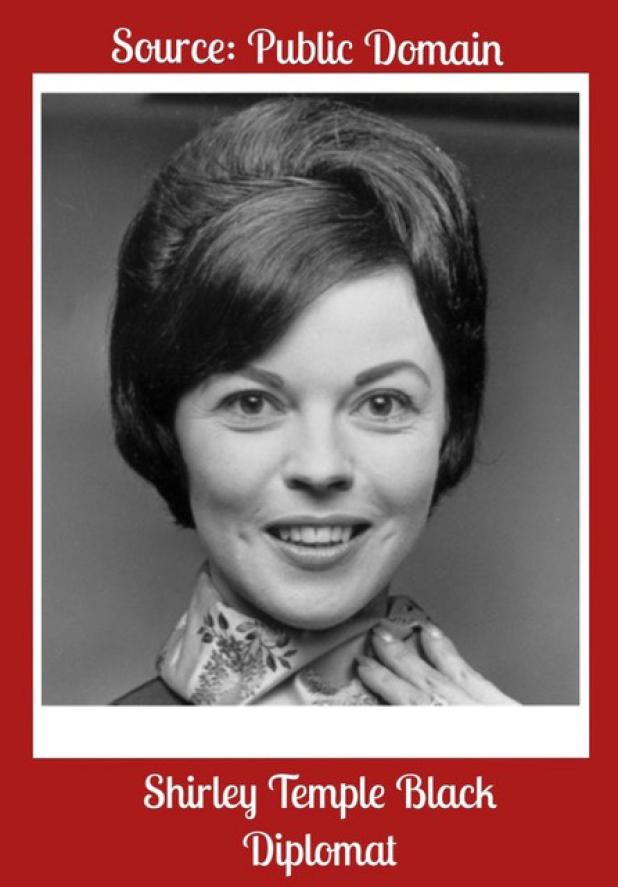
Shirley Temple - From Child Star to Ambassador
Only our oldest generation will actually remember Shirley Temple as a child star. She was Hollywood’s biggest star at age six. On February 27, 1938 she walked onto the Academy Awards stage and made history when she was awarded a special miniature Oscar—the first Juvenile Award ever given.
From 1934 to 1938, Shirley Temple was the number one box-office draw in America. She had become America’s brightest light during the Great Depression.
Shirley Temple’s curls were not a wig—they were her own iconic image. Her mother set her hair every night into exactly 56 curls, carefully shaped with rags. The look had to be identical every time. It was a painful procedure, and could take hours.
In 1935, Shirley broke protocol when she performed a tap dancing routine on screen with Bill “Bojangles” Robinson. It was widely regarded as the first interracial dance on screen in American cinema. At the time, it was groundbreaking and controversial.
The world loved Shirley Temple, the child. But, as she matured, roles slowed. She outgrew the role the world assigned her. In her early twenties she stepped away from acting—no public meltdown— no scandal spiral.
She chose a different life.
She married Charles Alden Black. They were married for over 50 years, and raised three children. Then she did something almost unheard of for a former child star—she entered public service.
Shirley Temple Black began her diplomatic career in 1969, when she was appointed to represent the U.S. at a session of the United Nations General Assembly. She served as U.S. Ambassador to Ghana, U.S. Ambassador to Czechoslovakia, and was the first woman to serve as U.S. Chief of Protocol.
World leaders addressed her as Ambassador— not “former child
star.”
When Shirley Temple Black died in 2014 at age 85, headlines led with her diplomatic career—that matters. Because the girl with 56 curls became a woman known for policy, leadership, and resilience. Fame defined her childhood, but it did not define her