
Pilot Study Starts for New Water Plant
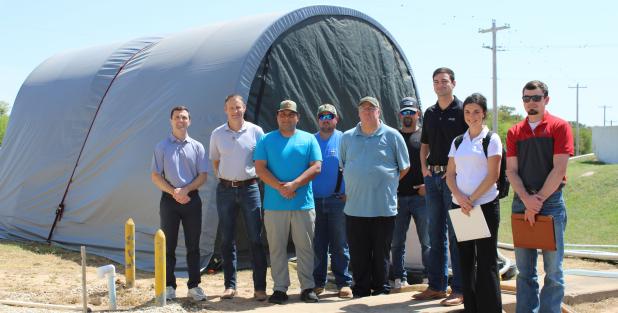
Mayor Rue Rogers, city staff and Kirt Harle, principal engineer with the city’s engineering firm Jacob & Martin, joined representatives from both companies at the plant to review the setup.
“The last couple weeks these guys have been here getting everything set up,” Mayor Rogers said during the visit.
The pilot testing units are temporarily connected to Olney’s raw water supply and will treat water drawn directly from the city’s lake source. Engineers will evaluate how well each system removes impurities and improves water quality.
Harle said the pilot testing phase is expected to run about four months, though it could extend slightly depending on testing requirements.
“We run the pilots for four months,” Mr. Harle said.
During the early phase of the program, the vendors will experiment with different treatment processes and chemical combinations to determine the most effective configuration for Olney’s water conditions.
“The first couple months they’re trying different treatment schemes, different processes,” Harle said.
State regulators require a final design run to confirm performance once the best treatment method has been identified. That testing period typically lasts about 30 days, followed by additional testing after the filtration membranes are cleaned.
Results from the pilot program will help the city determine which technology to use if Olney proceeds with building a new full-scale water treatment facility.
If both vendors meet the city’s water quality goals, Harle said officials will compare the systems based on cost, chemical use and other operational factors before selecting one.
“They’ll put together a proposal for a full-scale unit, and we’ll evaluate those based on cost and different parameters,” Mr. Harle said.
A third company, Purifics, had originally expressed interest in participating in the testing but later withdrew from the bidding process.
Mayor Rogers said the company did not have a full testing unit available within the project’s timeline.
“They didn’t have the full unit readily available,” Mayor Rogers said.
The equipment currently installed at the plant is temporary and designed only for testing. If the city moves forward with a full-scale system, Harle said the final installation would be much larger and housed in a dedicated building.
“It’ll look totally different than this,” he said. “There’ll be a new building and everything will be housed inside.”