
OEDC Shows Off New Designs for Infill Housing in NW Olney
Plans to build new homes on long-vacant, city-owned lots in northeast Olney are beginning to emerge following last month’s approval of a tax increment reinvestment zone aimed at revitalizing one of the city’s most neglected areas.
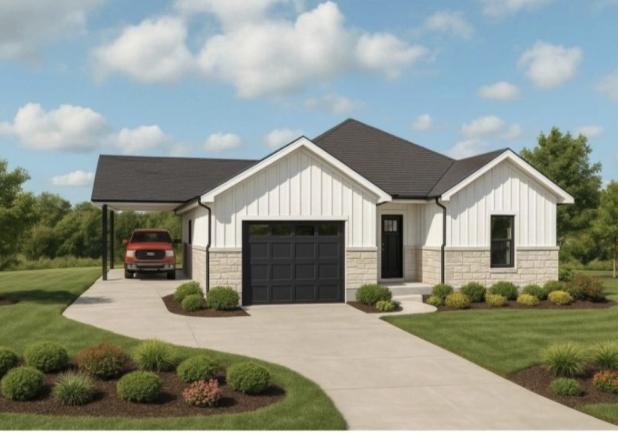
Tom Parker, executive director of the Olney Economic Development Corporation, recently shared renderings of modest single-family homes designed for the northeastern end of the city on his LinkedIn page. The images reflect early-stage planning tied to the new TIRZ, which covers portions of Main Street and northeast Olney.
The zone, approved by the City Council after a two-year effort led by Mr. Parker and the OEDC, allows future increases in property tax revenue to be reinvested within its boundaries to support cleanup, infrastructure and development.
“This is about creating a neighborhood that works,” Mr. Parker said in an interview. “Not just dropping houses onto empty lots.”
The effort focuses on roughly 47 properties in the northeast section of the city. Ten of those lots are expected to be purchased directly by the OEDC from Crombie Properties, which shut down a development plan over problems with platting and permitting. Mr. Parker said the plan is for OEDC to take control of an- other 37 city-owned lots within the TIRZ, clear them and prepare them for redevelopment.
Once that work is completed, OEDC would begin brokering the lots to builders with whom it is already in discussions. Allowing developers to work on clusters of lots, rather than isolated parcels, is intended to change the character of the area and make new homes easier to sell.
“It’s difficult to build value when you’re putting a new house next to a vacant lot,” Mr. Parker said.
The housing designs shared online show three-bedroom, two-bath homes ranging from about 1,300 to 1,600 square feet, with a one-car garage and an additional covered carport that can double as outdoor living space. Mr. Parker described the homes as economical and efficient, with an emphasis on curb appeal rather than luxury finishes.
The OEDC expects to take an active role in jump-starting construction by working with a local builder to develop a small number of speculative homes. Those initial houses, Mr. Parker said, would help establish momentum and demonstrate what the neighborhood could become.
Larger national builders are aware of the effort but are unlikely to move forward until the lots are assembled, cleaned and supported by infrastructure improvements, he said. Mr. Parker said smaller or poorly situated parcels could be converted into “micro- parks” — compact playground-style spaces with basic equipment. The idea is to provide neighborhood amenities, improve public safety and discourage nuisance activity.
There’s nothing like that on this end of town,” he said. “Even a small park can change how people use and take care of a space.”