
Lake Cooper Habitat Plan Starts With Fish
The Olney Economic Development Corporation (OEDC) is working with the Texas Department of Parks and Wildlife (TPW) to bring long-overdue recognition— and funding—to Olney Lake and Lake Cooper, with the goal of transforming the city’s historic water supply lakes into state-supported recreational destinations.
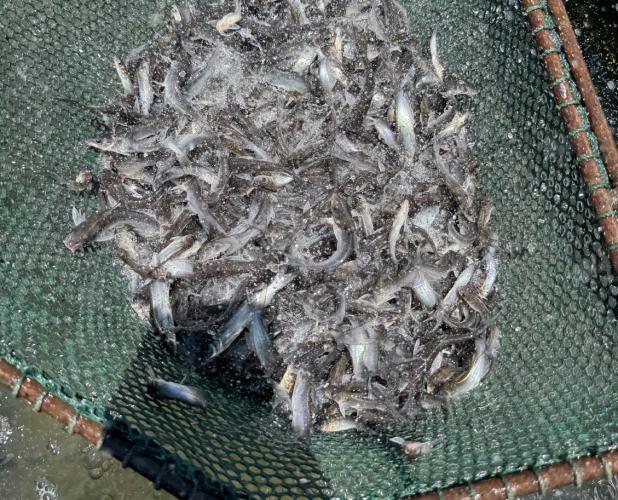
OEDC Executive Director Tom Parker said the first step in that effort took place on June 27, when TPW stocked Lake Cooper with catfish, marking the beginning of a partnership aimed at improving the lake’s aquatic habitat and infrastructure.
“For over a century, [Olney Lake and downstream adjoining portion known locally as Lake Cooper] has been an undocumented and unimproved body of water— not even listed on the state’s recreation maps,” Mr. Parker said. “This is the first phase of a larger plan to change that.”
TPW’s fish stocking effort allows the agency to begin formally documenting the lakes and evaluating their habitat. Although catfish are not the most desirable sport fish, Mr. Parker said the decision to stock them likely stems from uncertainty about the current habitat quality.
“They didn’t want to risk stocking something more sensitive, like largemouth bass, until they better understand what the lake can support,” he explained.
Mr. Parker said that formal mapping and habitat evaluation will improve Olney’s chances of receiving state grants for lake improvements. The OEDC has wanted to build a dock beside the Lake Olney boat launch, but state funding was previously out of reach because the lake lies outside city limits in Archer County—even though they belong to the City of Olney.
“Location has been a major roadblock,” Mr. Parker said. “Because the lakes aren’t technically within our city limits, we haven’t been eligible for some grants.”
The OEDC is exploring whether annexing the lakes into city limits would make Olney eligible for more funding. However, Mr. Parker said recent state legislation may prevent home-rule cities like Olney from taking certain actions unless expressly permitted by the state.
Mr. Parker said an initial proposal for the construction of a dock and habitat improvements was submitted under a Parks and Wildlife grant program, but it was not selected. The proposal included plans to improve angler access and build a dock to the left of the current boat launch for safety and usability. Although the proposal didn’t secure full funding, TPW placed Olney’s project on a list of future candidates and may still fund parts of the habitat enhancement plan, such as placing rocks and trees in the water to attract fish.
“They’ve already expressed interest in bringing out a barge to help us construct the fish habitat,” Parker said. “And that improves our chances of receiving a future grant for the dock.”
A meeting with TPW and other stakeholders is scheduled for the third week of September, where discussions will focus on documenting the lakes’ acre-feet capacity, aquatic habitat, and longterm recreational value— important steps toward securing sustained state support.