
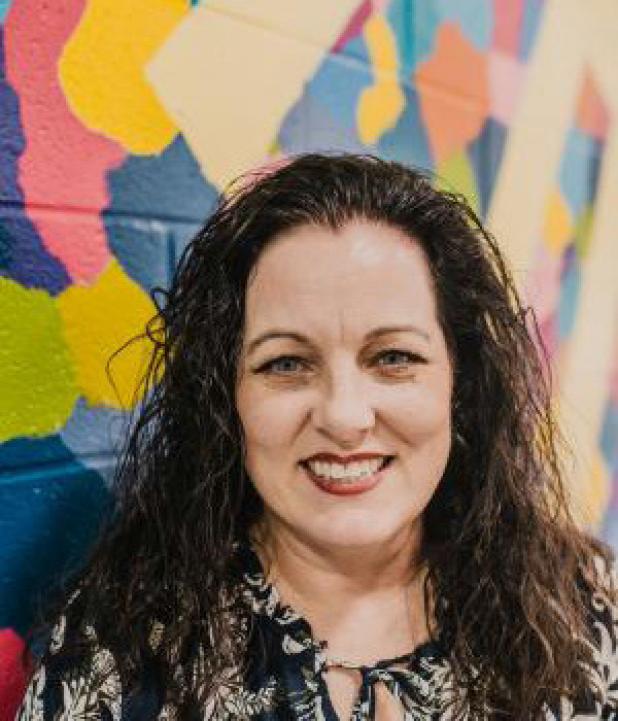
Teacher Profile: Kim Cuba
Kim Cuba was born and raised in Olney and began teaching in Olney schools after getting her bachelor’s degree in education from Midwestern State University. Olney Independent School District has been the first and only stop in her 28-year teaching career. She taught special education for eight years, then moved to second grade for seven years and has held her current post as a fifth-grade science teacher for 13 years.
At a time when state lawmakers are talking about the future of education in Texas, the Enterprise reached out to longtime Olney teachers like Mrs. Cuba to learn what real teachers need from the state and the community.
Enterprise: How much more paperwork do you have to do, how much unpaid preparation do you have to do?
started, my teaching certificate was considered lifetime so I don’t have to renew my teaching certificate every year except my ESL [English as a Second Language] that I added when I was teaching second grade and which I have to renew every five years. Everyone else who [got their teaching certificates] after 2006 has to take a certification test. They have to do 150 hours of professional development in that area every five years to be able to renew their certifications. That is something that’s been added since I became a teacher. You have to pay money to recertify … $74 per certification.
Enterprise: What else do teachers not get paid for? Mrs. Cuba: We usually end up spending at least $500 a year if not more on school supplies for kids and just little things here and there.
Enterprise: How have students and parents changed over the past 28 years?
Mrs. Cuba: When I taught special ed, I think I only had one kid that was really severe … it just seems like nowadays there’s so many more diagnoses. When I first taught, eight to 10 percent of the school was considered [special education]. Now it’s more like 20 to 25 percent.
Enterprise: I understand that OISD teachers had a rise in students with mental illness and domestic abuse during COVID. How are you handling that?
Mrs. Cuba: There was a lot of mental illness. I don’t blame it all on COVID. I think a lot of it’s social media … I think social media is a huge part of our mental illness problems right now. I have fifth graders, they’re 10. And I guarantee you, at least half of my class is on social media.
Enterprise: Where does the added bureaucracy come from?
Mrs. Cuba: A lot of it has to do with testing. Every time we get better at testing, they change the standard. We have kids come in that don’t speak English at all, but we’re still expected to teach them on grade level and they’re expected to test at grade level. The first year they’re here they’re allowed to take the test in Spanish. But I can’t teach in Spanish. So I can’t help them learn the concepts unless I use Google Translate, which is what I do all the time. And I don’t know what they’re learning because they don’t speak English and I don’t speak Spanish so that’s really hard because I don’t know exactly what they’re getting.
I teach everything I need to teach by spring break or shortly after spring break and then I spend a month reviewing everything we learned all year. Not only that … [the STAAR test] can also pull from 4th grade, and they can pull from 3rd grade science tests. So my kids can have questions asked on my STAAR tests about things they learned from a different teacher a year ago or two years ago.
I’ve seen kids cry and I actually had a kid throw up last year on the day of the STAAR test because she was so anxious about what she was going to make on it. Some kids just don’t take tests well.
We are also required to keep up paperwork on all kids that do not pass the STAAR or are struggling in our class. If they fail the previous year’s STAAR test, we are required to remediate them in a small group setting for at least 30 hours - either in summer school or during the school year on top of what we already teach during the day. We also have to keep up with progress monitoring and testing for the duration of that 30 hours.
Also, not only do our Spanish speakers have to take the STAAR test on grade level, but our special education kids also have to take the STAAR on grade level - whether they are actually on grade level or not. For example, I have a couple SpEd kids that read on a 1st grade reading level in 5th grade that will have to take the STAAR test on a fifth grade reading level!
Enterprise: What should rural schools do to recruit and retain more teachers?
Mrs. Cuba: A lot of it is money. That’s a huge thing. I’ve been teaching for 28 years. The state caps [teacher salaries] at 20 [years]. So, I technically lose money every year because my insurance goes up. I am making $50 less a month this year than I did last year because my insurance went up.