
Young-Jack County mental health efforts pay off in Austin
The state legislature made a $3 billion investment in mental health programs this session, including a grant program that will fund community-based initiatives “to develop innovative strategies that provided resiliency, coping and social skills, healthy social and familial relationships, and parenting skills and behaviors.”
Senate Bill 26, by state Sen. Lois Kolkhorst (R-Brenham), is aimed mainly at shoring up mental health care for children and their family members, but also contains provisions for continuing care to help people in state hospitals transition to home-based care.
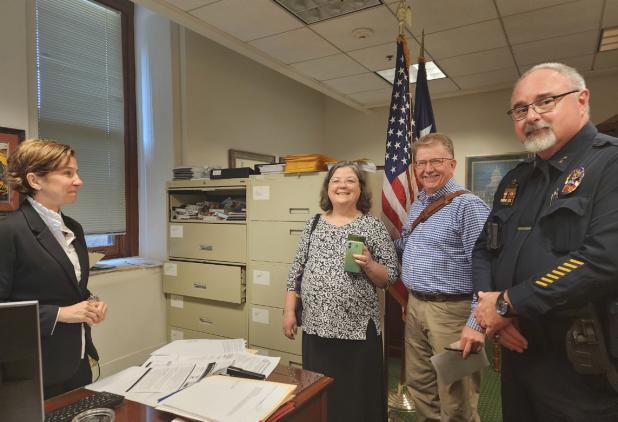
The $15 million grant program offered hope to a group of Young and Jack County leaders who spent the past year lobbying state leaders after three Olney residents died from lack of mental health care and the jails dealt with mentally ill inmates. Olney Police Chief Dan Birbeck, Licensed Professional Social Worker Mona Bernhardt, and others put together a plan for a mobile mental health intervention team and went to Aus- tin in February to lobby for a $1.3 million budget to fund it for two years.
“It’s good to see movement on this issue after all these years,” Chief Birbeck said.
Texas ranks last in spending on mental health for children and 33rd for adult care, according to the nonprofit advocacy group Mental Health America.
“It’s so good to see our state government’s interest in improving public mental health services which has been needed for many years,” Ms. Bernhardt said. “Exciting times!”
The new expenditure marks the state’s largest investment in mental health, said Rep. David Spiller (R-Jacksboro).
“There’s a huge amount for rural health care. We’ve spent more on mental health than we have ever spent,” Mr. Spiller said.
The two-county task force led by Jack County Judge Keith Umphress also proposed repurposing the Jack County Jail to provide mental health care for inmates from both counties and creating an education program for first responders and citizens about mental health issues.
“Early intervention has proven to reduce the pressures mental health has placed upon rural county jails,” Judge Keith Umphress said. “This bill will provide funding so local communities can establish crisis response teams made up of law enforcement, emergency medical and social workers. This provides a local solution to a statewide problem.”
Under the grant program, local governments must kick in up to 10 percent of the total grant. If funded, the mobile care team nicknamed CARRE (Critical Access Rapid Response and Evaluation) would work together to contact mental health consumers at their residences and develop a rapport with them. During the visits, the team would ensure that the consumer follows their physician’s treatment plan by taking medication and attending appointments. If a barrier is discovered, the team will assist the consumer with appropriate resources to ensure they follow their treatment plan. Should a consumer experience a psychiatric emergency, the team would respond and evaluate to determine if the criteria for detention by a peace officer for mental health evaluation and further detainment in a psychiatric hospital is warranted, according to the proposal.