
Young County Judge Candidates
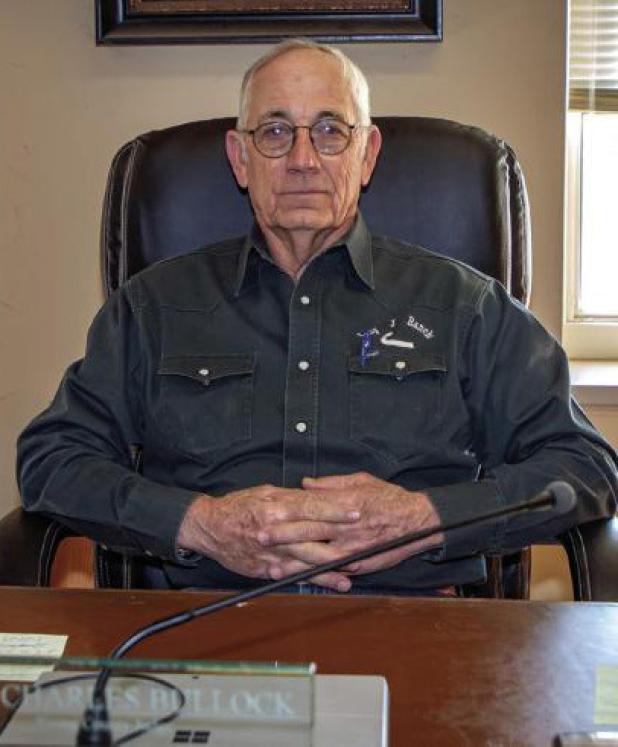
Former Young County Judge John Charles Bullock is coming out of retirement to run again for the post, a rematch with his successor, incumbent Win Graham, in a race that centers on spending, long-range planning, and how the county prepares for rapid change.
Judge Bullock, who served as Precinct 2 commissioner and county judge for more than three decades before leaving office in 2022, said his decision to run again was driven by concerns about excessive spending and a lack of strategic planning under the current administration.
“Spending,” he said bluntly when asked what he believes is the county’s biggest challenge over the next four years. “Budgetary.”
Judge Bullock said that during his tenure, he took the county judge’s statutory role as budget officer, producing balanced, fully funded budgets that required lower tax rates than those ultimately adopted by the commissioners court.
“You give it to the court, and they can get their hands on it,” he said. “But every budget I turned in had a lower bottom line and a lesser tax rate than what the court set.”
Judge Bullock pointed to $3.5 million in unexpected federal funds that arrived in the county’s accounts near the end of his term. Because there were no clear rules at the time governing how the money could be spent, Judge Bullock said he chose not to appropriate it. He said the funds were later spent by the incoming administration.
“That’s all gone, practically,” he said.
Judge Bullock said fiscal restraint will be critical as the county faces growing pressure on infrastructure, public safety, and health care. He acknowledged the financial strain facing Olney Hamilton Hospital, which must repay bonds on a new facility while having already lost maternity services.
“There’s no easy fix there,” Judge Bullock said, noting that the hospital is its own taxing entity and that simply raising taxes would compound residents’ burden.
On economic development, Judge Bullock described himself as pro-growth but cautious, emphasizing the need to protect agricultural land and diversify the tax base without sacrificing longterm sustainability.
“You’re either growing or you’re shrinking,” he said. “You’re not going to stay the same.”
Judge Bullock expressed particular concern about large-scale industrial projects, including renewable energy facilities and the proposed Project Saltworks data center, which he said will place heavy demands on roads, power infrastructure, and housing during construction.
“I’m not opposed to the data center per se,” Judge Bullock said. “But I think it’s going to put a huge stress on our resources for 10, 12, maybe 15 years.”
If reelected, Judge Bullock said he would push for long-range planning — looking 10 to 20 years ahead — something he believes should have been done before major projects moved forward. He also said he would revisit how the county manages its roads, favoring a more centralized, professional road and bridge operation to reduce politics and improve efficiency.
“You may not save money,” he said, “but you’ll get more bang for your buck.”
Edwin ‘Win’ Graham
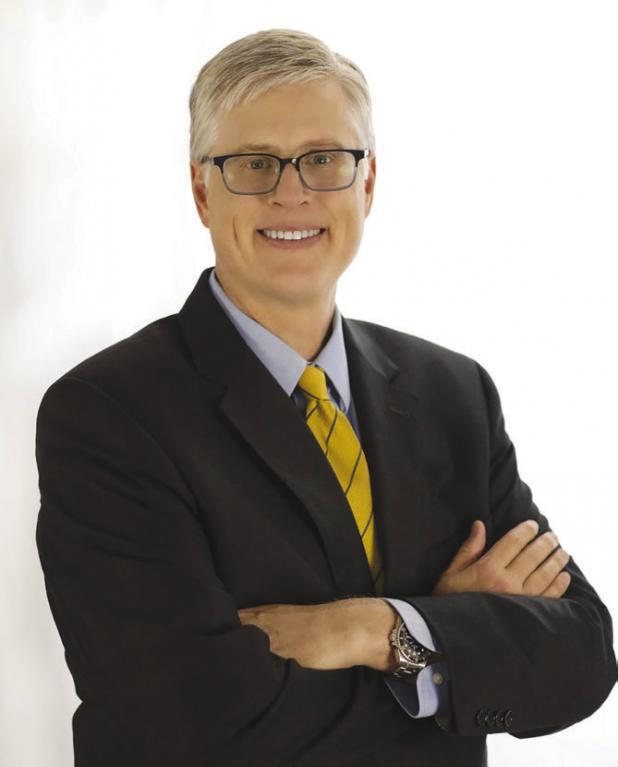
Young County Judge Edwin “Win” Graham IV has a name and pedigree that embody the City of Graham and Young County.
He is the great-greatgrandson of Kentucky land speculator Edwin Smith Graham, who, with his brother Gustavus Graham, founded the eponymous town in 1872. Judge Graham, who graduated from Graham High School and is a Young County landowner, says he returned home 20 years ago to serve the place that shaped him after building a successful international business career.
After earning an accounting degree from the University of Texas at Austin, Judge Graham began his career with the Big Six accounting firm Coopers & Lybrand, where he audited oil companies and earned his Certified Public Accountant license. He later worked as an international crude oil trader for Vitol and Shell, where, by age 30, he was managing a billion-dollar crude oil portfolio and “overseeing every barrel of foreign crude entering the Shell U.S. system,” he said.
Judge Graham moved back to Young County in 2005 when his father was diagnosed with terminal cancer. For the past 20 years, he and his brother have operated The Allar Company. Judge Graham has also remained involved in civic life—serving on the Graham ISD school board, the Young Central Appraisal District Board and Appraisal Review Board, the Graham Hospital Foundation, the Graham Industrial Association, and Virginia’s House Board of Directors.
Judge Graham says the County’s top priorities over the next four years are lowering the property tax rate, building affordable housing, creating higher-paying jobs for Young County residents, and preparing responsibly for growth.
“Young County’s needs are quickly outpacing its resources,” he said. “Our job is to be good stewards of taxpayer dollars while building partnerships that strengthen the entire county. I believe the Commissioners Court’s job is to make decisions and create opportunities that will have positive benefits for our cities, schools, hospitals, and the County.”
During his term, Judge Graham lowered the County’s tax rate, restored Young County’s eligibility for state and federal grants, and secured more than $1 million in grant funding. He helped reunite a fractured volunteer fire department system, repaired the County’s strained relationships with the cities of Graham and Olney, built the $1-million County annex without using local tax dollars, created a mental health critical response team, and updated long-outdated emergency management plans to bring the County back into good standing with the State of Texas.
Judge Graham says he is “focused on positioning Young County to attract industry that will bring high-paying jobs and new revenues for our cities, schools, and hospitals.”
He believes economic opportunities like green energy and data centers can provide critical relief to local taxpayers if handled responsibly. “No project is 100 percent good or 100 percent bad,” he said. “Each one requires a careful cost-benefit analysis and a countywide perspective.”
Judge Graham says he emphasizes transparency and accessibility. He publishes weekly “State of the County” updates on his County Facebook page, answers calls and messages daily, and meets regularly with city leaders, hospital administrators, and school superintendents.
“County government today is big business,” he said. “It requires experience, collaboration, and clear communication.”
Don Sexton
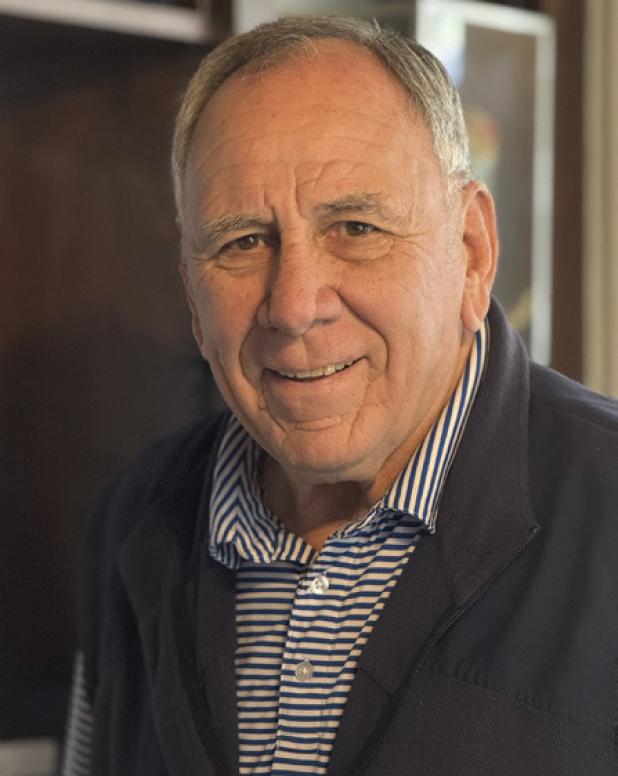
On a recent afternoon at Hudson’s on Main in Olney, Don Sexton and his wife, Bonnie, moved among tables, shaking hands, answering questions, and talking policy. A retired Air Force colonel and former CEO, Col. Sexton is running for Young County judge on what he described as a platform of fiscal discipline, property tax reform, and tougher negotiation with large-scale developers. He can often be found in these weeks leading up to the March 3 primary election at a table outside Big Luv’s BBQ.
He and Mrs. Sexton purchased land and moved to Young County in 2021.
Col. Sexton spent 30 years in the U.S. Air Force, graduating from the Air Force Academy with a degree in physics and later earning a master’s in personnel management along with advanced studies in national security management. A fighter pilot who flew F-4s, F-5s, and F-16s, he commanded units in Alaska, Japan, and in the Pacific theater, overseeing as many as 2,000 personnel and assets exceeding $1 billion. As a commander, he exercised Uniform Code of Military Justice authority, adjudicating disciplinary matters ranging from DUIs to more serious incidents.
After retiring from the Pentagon in 1998, Col. Sexton flew internationally for Federal Express while helping launch Avtec Research Corporation, a Nevada-based government contracting firm specializing in fighter aviation support. He later served as the company’s president and CEO and remains on its board of directors.
He argues that experience — particularly in budgeting and organizational management — translates directly to county government.
“If I’m going to complain,” Col. Sexton said, “I might as well do something.”
Property taxes are what first pushed him into the race. Col. Sexton said he compared effective tax rates in Young County with those in Florida and Nevada, where he also owns property, and concluded that Young County’s burden, as a percentage of assessed value, was higher. He also questioned the level of property tax relief offered to disabled veterans, calling current exemptions inadequate.
His solution begins with what he describes as a comprehensive audit of the County budget, focused on consolidation, eliminating redundancy, and reassessing “need” versus “want” spending. He also floated the idea of capturing more revenue from sales taxes, fuel taxes, or vehicle registration fees — though he acknowledged those concepts would require state-level coordination.
The proposed data center in southern Young County looms large in Col. Sexton’s campaign.
He says he is not categorically opposed to the project, but believes the County must conduct a clear cost-benefit analysis before granting any tax abatements. He has also raised concerns about the project’s projected one-gigawatt peak power demand, its potential impact on local electric rates, and increased traffic and infrastructure strain posed by up to a decade of construction.
On tax abatements more broadly, Col. Sexton argues the County has negotiated poorly in the past. He cited existing PILOT (Payment In Lieu of Taxes) agreements, including wind projects and the recently abandoned Plug Power hydrogen plant project, as examples where estimated valuations and payments may not align with long-term tax potential. He has called for stronger contract language, including clearer breach provisions if companies fail to meet commitments.