Presidents from Local Businesses Show Support for New Water Treatment Plant
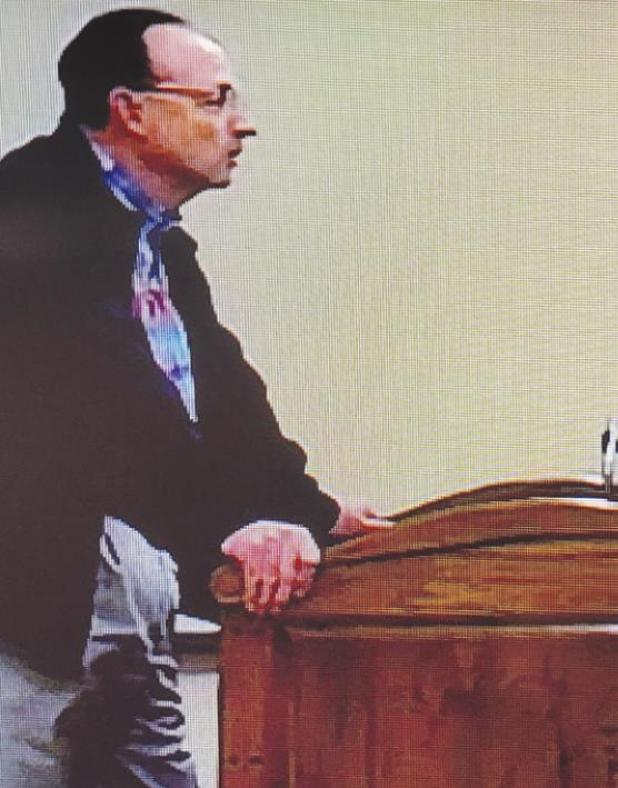
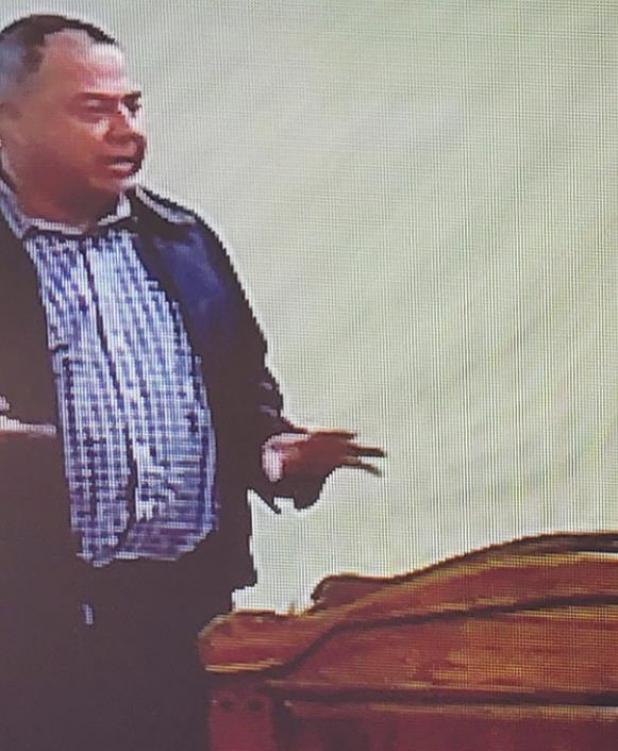
Tower Extrusion President Mark McClelland and Air Tractor President Jim Hirsch appeared before City Council at the Jan. 10 meeting to support the new water treatment plant. Mayor Rue Rogers yielded the floor to the only two citizens who signed up for the public comments period.
McClelland was the first to address the council. He opened with clarifying statements to set the record straight regarding misinformation about Tower as it relates to the water in Olney.
“As I go around town, I hear things and thought it would be best to come to straighten them out. There seems to be a lot of mistruths out there,” McClelland said about the misconception that the city paid for the water meter and line for the cast house that Tower installed. McClelland told the council, “You didn’t [pay]. We paid the city $9,300. We paid Handy Andy and Brandon McKinley $36,810.00.”
Next, McClelland responded to a statement made at a previous meeting wherein it was suggested that the city should charge Tower an industrial rate for water. McClelland said Tower would save money if they were charged an industrial rate, noting that Fort Worth gives their industries a 44.8 percent discount through his research. McClelland told the council that he was not asking for a discount, just pointing out the difference to clarify the rumor. He said in his concluding statement to the council, “You’ve come up with a solution to the problem, and I will pay whatever you ask me to pay.”
After McClelland spoke, Jim Hirsch came forward to share his support for the new water treatment plant.
“Water is a critical infrastructure that smalltown USA must have to survive. Without water, as Mark pointed out, we won’t be a town. You must have a hospital. You must have a bank. You must have water and basic infrastructure services,” Hirsch said.
In his closing remarks, Hirsch acknowledged that the existing plant is in bad shape and stated that he fully supports the plan to go forward with a new plant.
Tom Parker, the mayor pro tem, and Arpegea Pagsuberon, interim city administrator, said they are grateful for the support and emphasized a few key points to help residents understand the process of building the new plant.
“The subcommittee of the finance group went through all of the iterations and came up with the quickest, safest, and most economical way to fund the project, which was doing a bond, because it allowed us to get to the market quickly and be able to get funds available at the lowest cost possible for the term of the note. And while inflation continues to increase and the cost of money continues to increase, it became more evident that we need to act expediently,” Parker said.
Parker explained that the city has a municipal bond funded through the commercial market, which allows the city to shop for the lowest rate. He said the bond is not tied to the tax rate, so taxes will not increase because of the municipal bond. Also, he said it is vital to move quickly to secure the $13.5 million while rates are low.
Pagsuberon further explained the Certificate of Obligation that the Council passed for the $13.5 million.
“Before applying, we had to decide on the amount. We decided on $13.5 million because we can never, during the process of that loan, increase that amount and at that time, $13.5 million would cover the cost of a new water treatment plant. We could always use less,” Pagsuberon said.
The repayment of the bond—a 30-year note—will come from the $30-$50 increase on residents water bills. The residents must vote to approve the Certificate of Obligation for the amount of $13.5 million to build the new water plant. However, the city has not called for an election as of Jan. 28, but may do so before the February deadline.
In addition to the additional water rate, residents will see a monthly surcharge added to their bills beginning February. Residents will pay $10 for the first three months. After that, the amount will increase to $20 for the subsequent three months and then increase to $30 for each month.
Pagsuberon said, “The surcharge is per meter, and the money will be used specifically for water projects such as pipes, meters, instrumentation gauges, towers, engineering and materials.”
In addition to the surcharge funds, the city plans to use some of the funds from the American Recovery grant for water projects. The federal government awarded the city more than $700,000 for two years. The city has already received the first half and expects the remainder next year.