
Olney feeding programs meet with area food bank reps
The administrators of Olney’s feeding programs got an early Christmas present this year – learning at a Dec. 8 meeting that an anonymous donor has paid all costs for them to use the Wichita Falls Area Food Bank in 2023.
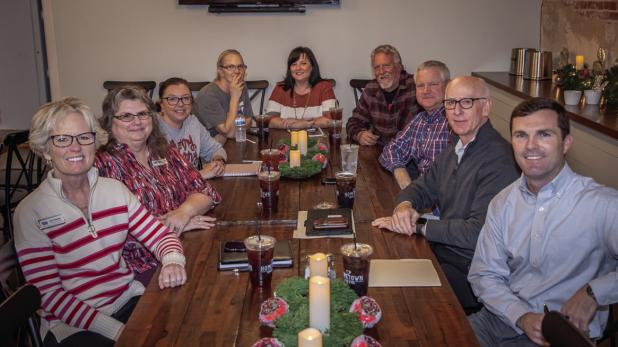
The group met for lunch at Hometown Coffee & Tea with the representatives from the Wichita Falls food bank - departing Chief Executive Officer Karen Nickens, Interim Chief Executive Officer David O’Neil, and Administrative Director Michelle Oates - to discuss Olney’s food needs for the coming year.
Olney Mayor Rue Rogers invited the food bank to town to speak with the city’s four feeding programs, after meeting twice with Mr. O’Neil.
“I wanted to organize a meeting with the people leading the efforts on the front lines within our community,” Mayor Rogers said. “The meeting allowed different groups in Olney to meet with each other, and the executives from the Wichita Falls food bank.”
Mr. O’Neil thanked Mayor Rogers for setting up the meeting, and said he came away with a “sense of pride in the community.”
“Those agencies do everything in their power to meet the needs of the community,” he said. “Everybody has a mission, and they are passionate about the mission.”
The food bank representatives informed the Olney group - Preston Crow of the House of Mercy, Angela Lockard and Nancy Bowden of the Olney Senior Cub Center, Mayor Rogers, Pastor Harrell Braddock of the First United Methodist Church of Olney and Shannon Moses of the First Baptist of Church of Olney’s Ministry of Helps – that for the third year in a row, an anonymous donor would pick up the tab for the provisions they take from the food bank. That cost averages $640,000 each year for the food bank’s 12-county area, which comprises 180 agencies or programs, Ms. Oates said.
The feeding programs that use the food bank usually have to pay a “share handling fee” based on the weight of the pallets of food, Ms. Oates said. That fee pays the food bank’s transportation, warehouse, and staffing costs, she said.
Mr. Crow said the fee usually amounts to $500 per month for the House of Mercy.
“It’s a big difference,” Mr. Crow said. “You wouldn’t think so but it is. We always plan for spending that money [on food] but when you don’t have to – it means that somebody that is coming in [to the House of Mercy], they are paid for that month.” The House of Mercy, a Christian addiction recovery program, feeds about 30 people per month, three meals a day plus snacks, and depends on a combination of donated food and the residents’ SNAP benefits, he said. The local Allsup’s Convenience Store regularly donates bread and milk, he said.
The food bank “doesn’t feed them all but it helps out a bunch,” he said.
The Wichita Falls group also offered to help the Olney programs find grants or donors to provide new kitchen appliances or supplies they need to keep them in compliance with food bank regulations, said Ms. Oates, who conducts annual inspections for the food bank’s local partners.
Mr. O’Neil said hunger in Northwest Texas “continues to be an issue, with rising inflation … and a possible downturn in the economy.”
“It’s making it harder for everybody, especially those on fixed incomes to feed their families, and even seniors,” he said. “I don’t think that our partner agencies are seeing anything different.”
Anyone interested in donating to the Wichita Falls Area Food Bank can send a check to P.O. Box 623, Wichita Falls, Texas 76302 or go to the website at wfafb.org.