
OHS Students Help Build a Better Future for Olney Lakes
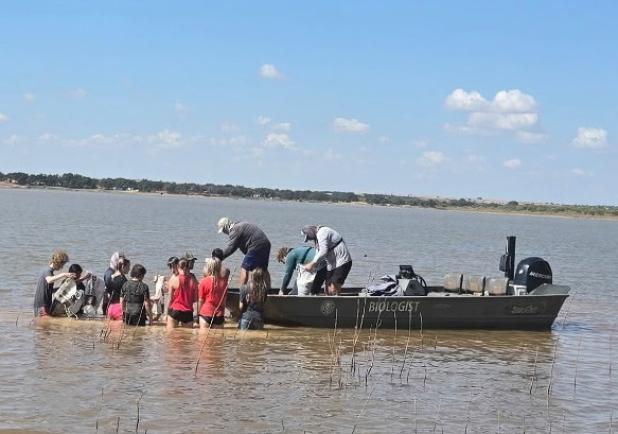
Olney High School freshmen and sophomores added some muscle last week to a community effort to bring Lake Olney and Lake Cooper back to life as a recreational destination.
The students worked under the guidance of Texas Parks and Wildlife fisheries biologist Wes Dutter to construct three more fish spawning beds, continuing work begun earlier this month when six OHS Ag students and four Texas Parks and Wildlife volunteers installed three beds around the lake.
That brings the project to six spawning beds designed to improve habitat for sun- fish, largemouth bass and crappie — and represents another step in a larger Olney Economic Development Corp. effort to improve fishing and recreational opportunities at the lakes.
The spawning beds give fish protected areas to reproduce. Fish use their tails to fan the peasized gravel into pockets where they can deposit their eggs. Texas Parks and Wildlife uses spawning gravel beds and other artificial habitat as tools to improve fish habitat and angling opportunities in Texas reservoirs.
Mr. Dutter told the Enterprise during the first workday that improving habitat for the three species can help strengthen the lake’s overall fishery.
Sunfish are an important part of the food chain, providing forage for largemouth bass. Bass are among Texas’ most sought-after sport fish, while crappie are popular with North Texas anglers and can provide an accessible fishing experience for youngsters and beginning fishermen.
The first round of work was no small undertaking. Each of the six spawning beds installed earlier this month required roughly 10 to 15 40-pound bags of pea gravel. Students and TPWD volunteers also had to move more than 11 pallets of gravel to work sites around the lake.
Last week’s work added three more beds — and another group of OHS students to the growing list of partners helping with the lakes project.
The habitat improvements are part of a broader effort being led by the OEDC to rejuvenate Lake Cooper and Lake Olney as recreational areas, to create better opportunities for fishing, picnicking, and other outdoor activities while making the project more attractive for additional grant funding.
Young County has also joined the effort. County commissioners have provided cooperation and equipment to clear and level areas around the lakes for future parking and picnic areas, complementing the work being done in the water.
The pieces are intended to work together: improve the fish habitat and fishing, make the shoreline more accessible and inviting to families, and demonstrate enough local investment and cooperation to attract outside funding for additional improvements.
Future fish-habitat work could include adding brush, plant material, and other underwater structures that give fish more places to spawn, feed, and take shelter. TPWD fisheries programs elsewhere in Texas similarly use submerged brush and artificial structures to provide cover and concentrate fish for anglers.
For OHS students, however, the project also offers something that can’t be measured in bags of gravel or grant dollars: a chance to help rebuild a community resource they will be able to enjoy themselves.
With six spawning beds now in the water, Olney’s students have quite literally helped lay the groundwork for the next generation of fish — and perhaps the next generation of fishermen — at Lake Olney and Lake Cooper.