
Honey biz is sweet for young beekeeper
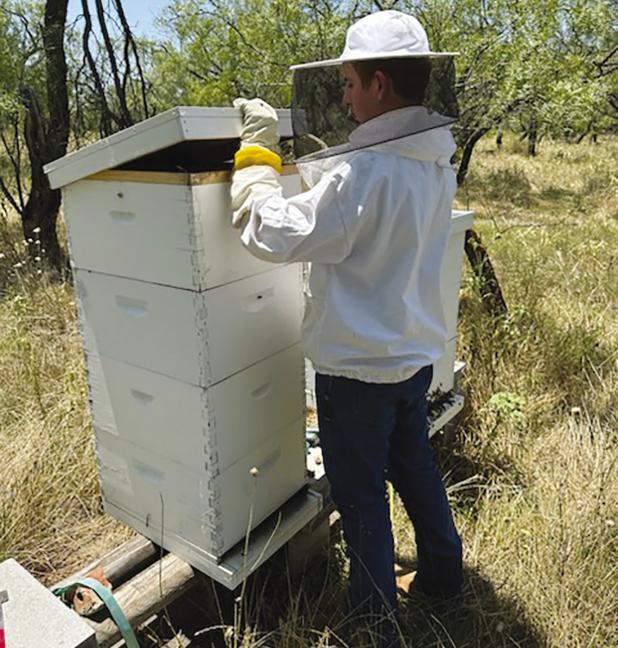
Olney High School freshman Colby Johnson just completed his second year as a beekeeper, a hobby he started while home from school in the depths of the COVID pandemic in 2001. The 14-year-old started researching beekeeping as something to do when the world returned to normal, and last year he harvested his first honey – 25 pounds of it – and started a business selling honey.
Colby and his dad, Dr. Jeremy Johnson, an Olney Hamilton Hospital board member, planned to go big this year by expanding the number of hives and potentially tripling their honey output to 75 pounds.
We check in with Colby during his honey harvest to see how his expansion plans worked out. He will be selling his honey again this year, and interested buyers can contact Dr. Johnson at jjohnson@ grahamhealth.org for prices and availability.
The Enterprise: Did you act on your plans to expand your hives?
Colby: We did expand and got three other hives. We put one at the usual location and we put two at a farmer’s field to help pollinate his crops.
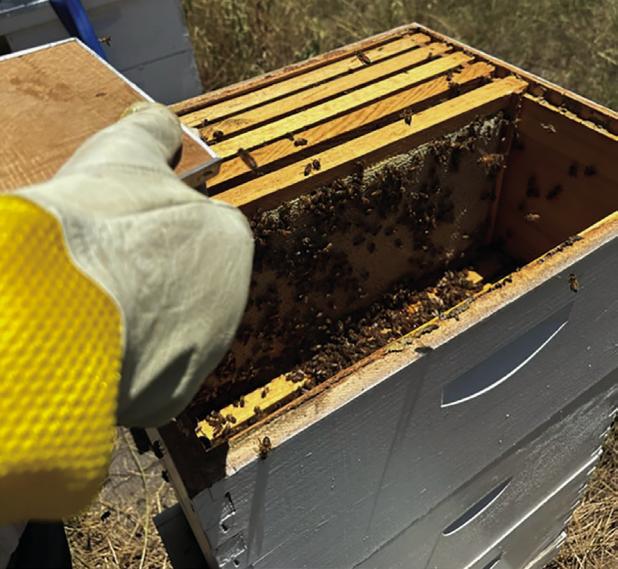
It’s been usually the same things - most hives aren’t that differ- ent. One of our hives has a lighter coloration of honey and one is deeper. That one is a slightly different kind [of bees].
Our usual hives are “Texas 5000,” a mix between Golden Cordoban and Italian honeybees. Italian honeybees are a very violent type of bees and they produce a lot of honey because of their violence. Golden Cordobans are very calm and that’s why you mix them. I think our Golden Cordoban had the lighter honey … because they’ve been here longer.
Q: How do you handle more aggressive bees?
A: That’s not much we can do but we try to put more smoke down. We try to be calmer when we move with them … they always try to sting us. Their aggression is measured by how long they hang around.
Q: How is the harvest turning out?
A: We started harvesting last Sunday … we’ll have 90 pounds of honey. It’s ready, and we are going to try to get the rest in tonight. We have about 40 pounds left to get in. We got 90 pounds from two hives – we have to wait a year to harvest [the new hives]. We should have 220 pounds next year.
Q: Is anything different this year because of the rain or heat?
A: I think the weather did [have an effect]. Our comb was a lot darker this year than last year. It looked kind of burnt but it was still fine. We think that’s because of the heat.
Q: Did those extra hives mean a lot of extra work?
A: It’s not much extra work, seeing as most bees are pretty low maintenance.
Q: What are your plans for next year?
A: We are definitely getting at least two more hives. We’re probably going to keep most of them here [at home] and put one at the farm. We will have to ask the farmer if he wants more. I want to see what is the difference in the honey taste and color. They are next to a field that has peas and vegetables - lettuce, cucumbers and that kind of stuff. The farmer owns two greenhouses