County Residents Express Hope, Fears at Data Center Event
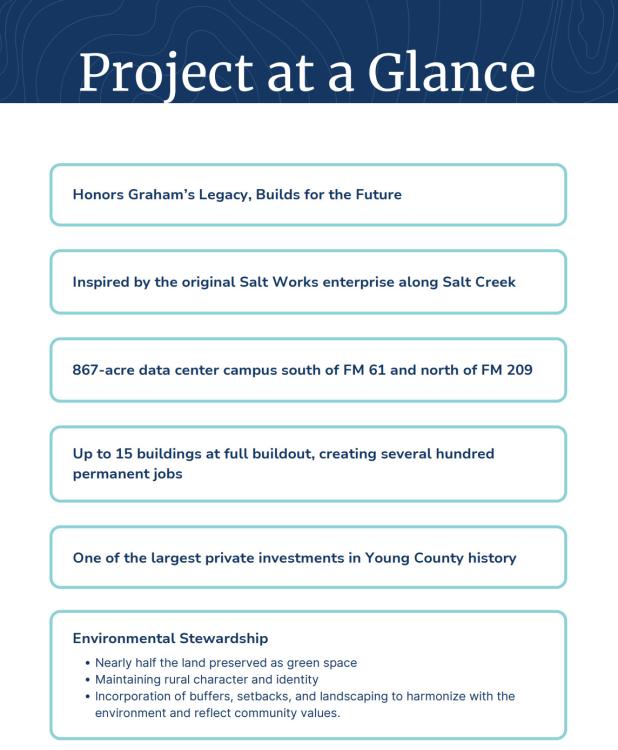
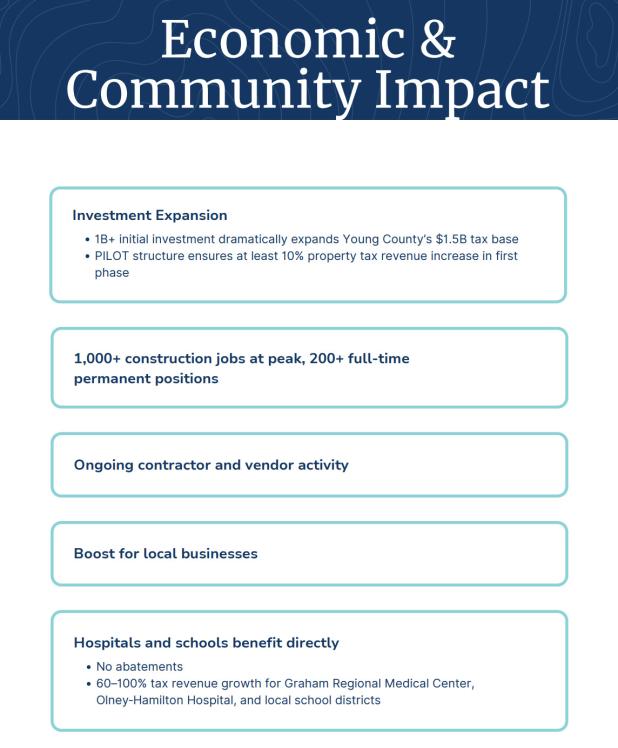
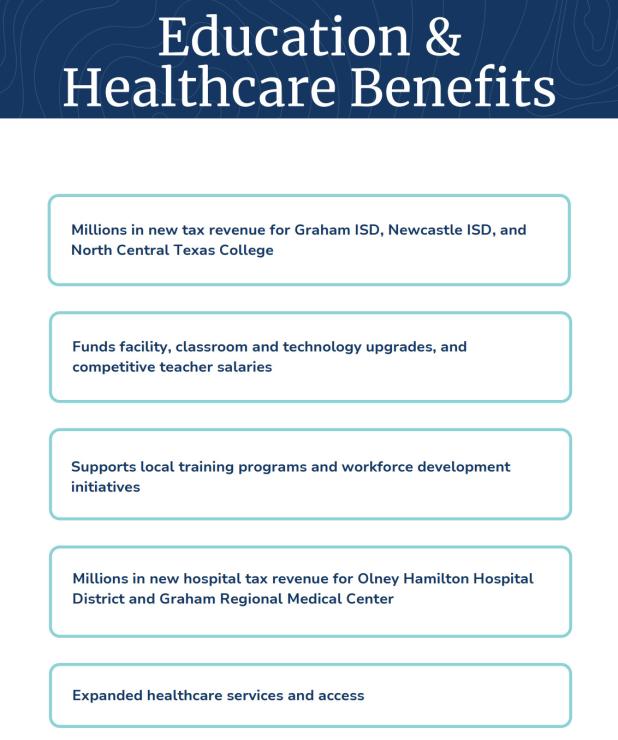
A crowd of roughly two to three dozen Young County residents filled the Middle Sister restaurant in Graham last week for a come-and-go reception with representatives of Project Saltworks, the $1–1.5 billion data-center campus proposed east of town.
While many attendees came with technical or business questions, others gathered at nearby tables to voice the worries circulating on social media: that vibration from cooling systems would drive away wildlife and sicken cattle, that light pollution would make rural homes unlivable, that Artificial Intelligence posed moral or spiritual dangers, and that county commissioners should not grant tax abatements to the developer.
Inside the private dining room, Curtis Miller of Stream Data Centers fielded questions from local business owners, construction workers, and economic-development officials, including Olney Economic Development Corporation executive director Tom Parker. Discussions focused on tax-revenue predictability, phasing of construction, general- contractor selection, and the one-gigawatt power request Stream has submitted to Oncor.
Across the dining room, several residents discussed the personal and environmental impacts they feared the project might bring.
One woman, who asked not to be named but said her family has lived in Young County for six generations, worried that the data center would harm both people and livestock.
“If it affects us, it affects the animals. I came back to get away from all this mess,” she said. She added that friends who live along Highway 209 believe the facility will sit “right at their fenceline,” and expressed religious objections to the industry: “We are all spiritual beings made up of different frequencies … We don’t need AI. We have Jesus Christ.”
Another woman said friends in Granbury who live about three miles from a bitcoin-mining operation reported experiencing tinnitus, anxiety, and insomnia, which they attribute to vibrations from that facility’s equipment.
These concerns echoed the most common themes raised online and in recent public meetings: wildlife displacement, persistent noise and vibration, night-sky glow, and skepticism about the role of AI technologies in rural communities.
Mr. Miller told attendees that Project Saltworks intends to provide large vegetative buffers, deep setbacks, and dark-sky-compliant lighting. He confirmed that the company’s noise model calls for 55 decibels at the property line and 45 decibels at nearby homes, levels comparable to a quiet library or the hum of a refrigerator.
The Project Saltworks team plans additional open-house sessions in January to share updated renderings, answer technical questions, and continue addressing misinformation about the project.