
Sheriff Steps into County’s Mental Health Care Void
When Young County Sheriff Travis Babcock walks through the jail he has overseen for nearly a decade, he doesn’t just see steel doors, narrow corridors, and concrete walls. He sees a work in progress—one that he hopes will fill the void left by decades of underfunded mental health care in rural Texas.
Earlier this year, Sheriff Babcock secured a $400,000 state grant to launch a mobile mental health response unit - a plan conceived by former Olney Police Chief Dan Birbeck and supported by elected officials from Young County and the cities of Olney and Graham. That team is now up and running and dispatched to calls across the County.
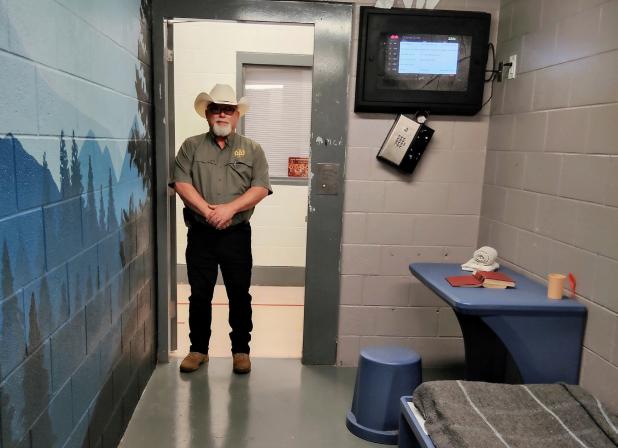
Inside the jail itself, Sheriff Babcock has gradually transformed the facility into what amounts to a stopgap treatment center, outfitting cells, training staff, and opening the door to faith-based recovery programs.
Sheriff Babcock led the Enterprise on a tour of the jail last week, pointing out the steady improvements he and his jail staff have made.
“Contrary to popular belief, mental health has always been at the heart of what we do here,” he said. “You look someone in the eye who’s talking in three different voices, and you know they need help. The problem is, that help might be 400 days away.”
Inmates once confined to cold metal cells now spend time in spaces softened with new plastic furniture, softer paint colors, and suicide-resistant designs.
The changes may seem cosmetic, but Sheriff Babcock says they help calm agitated inmates and provide staff with a safer environment in which to work. One inmate, he recalled, broke down crying when he saw the renovated cell.
The upgrades— roughly $3,000 for each refurbished room—were paid for with commissary funds collected from inmate purchases of snacks, nicotine patches, and personal items.
The jail is no longer just a holding facility. It now hosts church services, Bible study, and Celebrate Recovery, a nationwide Christian program that helps participants address drug and alcohol addiction. Local volunteers from multiple congregations rotate through the jail to lead sessions.
The aim, Sheriff Babcock said, is continuity: “If you just hand someone a piece of paper with a meeting address when they’re released, they’re not going to go. But if they start the program here, they know it works, and they’ll continue when they leave.”
Faith Center volunteers even bring a live band once a month for worship services, where dozens of inmates have been baptized.
Despite these efforts, Sheriff Babcock is candid about the toll mental illness takes on his deputies and jail staff.
“There have been times when whole shifts have quit because they couldn’t handle what they were seeing,” he said. Staff monitor inmates constantly on more than 160 cameras, intervene during suicide attempts, and sometimes escort fellow officers to psychiatric hospitals when their own mental health falters.
The sheriff has had to order deputies into treatment at VA hospitals, unwilling to risk losing them to burnout or worse. He views his mental health initiative as a “never-ending journey.” He recently toured mental health facilities in jails in Dallas and Houston, bringing home ideas he hopes to implement in Young County, including converting larger cell blocks into treatment pods and hiring licensed clinicians to provide onsite restoration services.
Such innovations, he said, could cut down on the 12- to 18-month wait times many inmates face before they can be transferred to a state psychiatric hospital. One Young County inmate recently waited more than 400 days for a competency hearing.
“My goal is to start the restoration process right here, the day we get the paperwork,” Babcock said. “But to do that, we need professionals on staff and the funding to pay them.”
The sheriff ’s mobile mental health unit, funded by the $400,000 grant, is designed to prevent some of these crises before they reach the jailhouse doors. Trained responders are dispatched to homes and communities when families, schools, or police call in concerns.
Since launching this spring, the unit has answered 28 call-outs. “We’re still getting the word out,” Sheriff Babcock said. “But people are starting to see that it works. The more we use it, the more lives we can save.”
With a jail capacity of 144 and an average daily population hovering in the 90s, Young County is one of the largest rural jails in Texas and an unintended center for mental health services.
“Every little bit helps,” he said. “If we can get one person clean, one person stabilized, then we’ve done our job. But we want more than one. We want as many as we can.”