What’s In Store for Olney In 2026?
The new year arrives in Olney with the prospect of blueprints, cranes, contracts, and dirt turning over all over town. It comes with a growing sense that projects long discussed are finally happening.
As 2026 begins, Olney stands on the threshold of one of the most consequential periods of investment the community has seen in decades. New housing. New industrial prospects. A new hospital rising from the ground. Storm shelters for students. A long-delayed water treatment plant back on track. None of it arrived easily. Much of it took longer than planned. Nearly all of it is being driven locally — by residents, boards, and voters who decided not to wait any longer for help that might nev- er come.
Over the past year, the message from Washington and Austin has grown increasingly clear for rural communities: resources are tightening, priorities are shifting, and many long-standing programs face cuts or uncertainty. In Olney, that reality has sharpened resolve rather than dampened it. The projects moving into 2026 share a common thread — they are locally planned, locally financed, and locally defended as essential to the town’s future.
T hat resolve is perhaps most visible at the site of the new Olney Hamilton Hospital. What was once a set of plans and budget spreadsheets became tangible in 2025, as bids came in at budget and leaders broke ground on a new $33 million facility. For a town that has fought to keep health care close to home, the hospital is no longer a promise — it is a presence. OHH board members, faced with the loss or reduction of tax revenue to fund the project, worked with state and federal agencies to hold the line on services - a mission that continues in 2026.
Infrastructure that makes growth possible is also moving forward. After nearly two years of delays caused by soaring construction costs, the Olney City Council approved a plan to build a modern membrane-based water treatment plant, ending years of uncertainty. With more than $14 million in bond funds already secured, the decision clears one of the biggest obstacles to housing, industrial development, and long-term stability. It is not flashy, but it is foundational — the kind of investment that quietly determines whether a town can grow at all.
Housing and industry sit at the center of that growth strategy. The creation of two Tax Increment Reinvestment Zones — TIRZ 1 for housing and TIRZ 2 for industrial development — reflects a deliberate effort to expand Olney’s tax base and attract both residents and employers. City leaders have also begun reworking permitting rules to reduce red tape and make building in Olney simpler and more predictable.
Those efforts may soon intersect with opportunities that once seemed far-fetched. County officials confirmed that a major data center has expressed interest in locating within the Olney Hamilton Hospital taxing district, drawn by Young County’s energy infrastructure. While still speculative, the potential revenue underscores why Olney has focused so heavily on readiness.
Private investment is already responding. In 2025, Olney welcomed a new ACE Hardware store, celebrated the opening of Old Time Café, and saw steady participation in Chamber of Commerce events — signals that people are willing to invest their own money here.
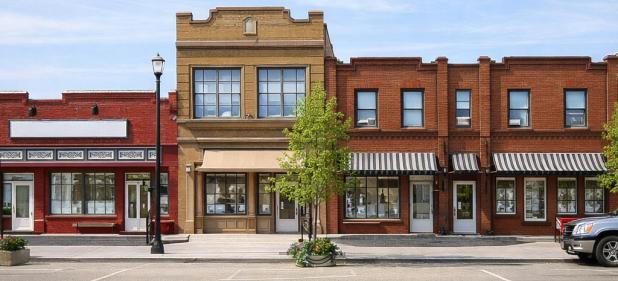
Some of the most essential investments have drawn less attention but speak just as clearly to the town’s direction. In May, Olney opened a new Public Safety Building for the police department, funded entirely through private donations and partnerships. Economic development leaders are also laying groundwork for future Main Street redevelopment, exploring state-backed financing aimed at revitalizing aging properties and strengthening the city’s core.
The future Olney is building is not just concrete and steel. Voters approved bonds for storm shelters at school campuses. Students brought home state championships in academics. The community awarded more than $80,000 in local scholarships to graduating seniors. Leadership transitions at Olney ISD promise continuity rather than disruption.
None of this erases the challenges ahead. Federal funding uncertainty continues to threaten programs that serve seniors and low-income residents. Costs are rising. Construction brings disruption. But as 2026 begins, Olney is not standing still or waiting to be rescued.
It is building what it needs, with what it has, and inviting others to join — on its own terms.
That, more than anything, is what the new year holds.