
OHS Ag Class Helps State Boost Fishery at Lake Cooper
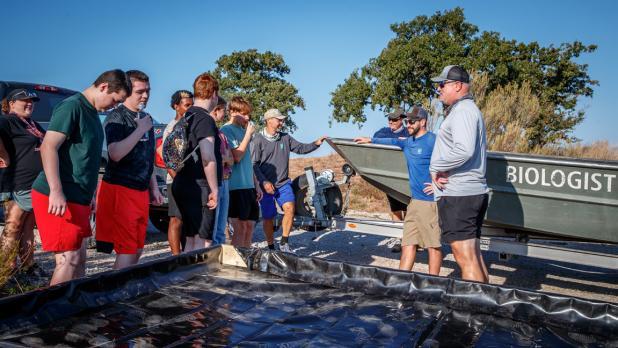
The Olney High School Ag Class enjoyed a day of learning, helping and hard work as students teamed up with Texas Parks and Wildlife volunteers to give the fish at Lake Olney and Lake Cooper a little help — and anglers hope for better fishing in the future.
The goal of the workday was to improve fish habitat in the lake, according to Wes Dutter, a fisheries biologist from Wichita Falls with Texas Parks and Wildlife.
Mr. Dutter said the project is aimed at helping three important fish populations: sunfish, largemouth bass and crappie.
Sunfish play an important role in the lake ecosystem by eating aquatic insects, snails and other small organisms. They also provide an essential food source for largemouth bass.
Largemouth bass, of course, are prized by anglers. A healthy bass population can make a lake more attractive to fishermen and potentially bring out-of-town visitors into the community.
Then there are crappie, a favorite of many North Texas fishermen. They gather in groups, are tasty on the dinner table, and are relatively easy to catch, making them a great fish for youngsters and beginning anglers.
To give all three species a boost, the OHS Ag students joined Texas Parks and Wildlife personnel to install six spawning beds at various locations around the lake.
The beds give fish a safer place to lay their eggs. Fish fan the small gravel with their tails to form pockets where they can deposit their eggs. Mr. Dutter said future habitat improvements could include adding brush, plant material, and other debris that will provide fish with additional shelter and spawning areas.
Installing the beds was no small undertaking for the six OHS Ag students and four Texas Parks and Wildlife volunteers.
Each spawning bed had to be placed in the water and then filled with pea-sized gravel — about 10 to 15 40-pound bags for each bed.
That is a lot of gravel and a lot of muscle.
Mr. Dutter said organizers had hoped to enlist the Olney Cubs football team before the season began to provide some varsity- level horsepower, but they were never able to coordinate a workday that fit everyone’s schedule.
The crew ran into another challenge after placing the spawning beds around the lake. More than 11 pallets of gravel still had to be unloaded from a tractor-trailer and transported to the different work sites. The group had to pause while arrangements were made to find a tractor or forklift capable of doing the job.
But the OHS Ag students didn’t let a little downtime go to waste.
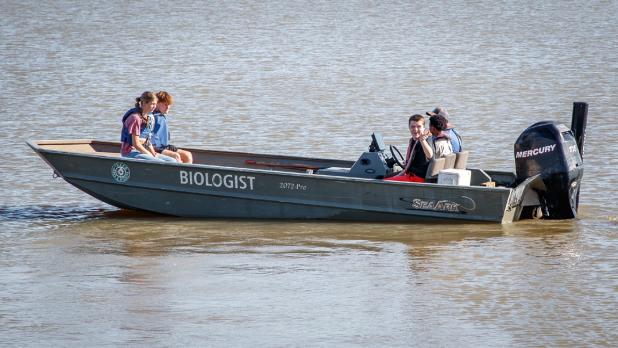
Before long, they had turned the wait into a rock-skipping competition on the lake. Later, Mr. Dutter offered the students boat rides around Lake Olney.
It was a little work, a little learning, and a little fun — all in the name of giving Lake Olney’s fish, and the people who enjoy catching them, a better future.