
Heat, Dry Grass Push Fire Danger to Extreme
Young County firefighters are warning residents that a single spark could ignite a fast-moving grass fire as record heat, low humidity and an abundance of sun-scorched vegetation create increasingly dangerous conditions across the area.
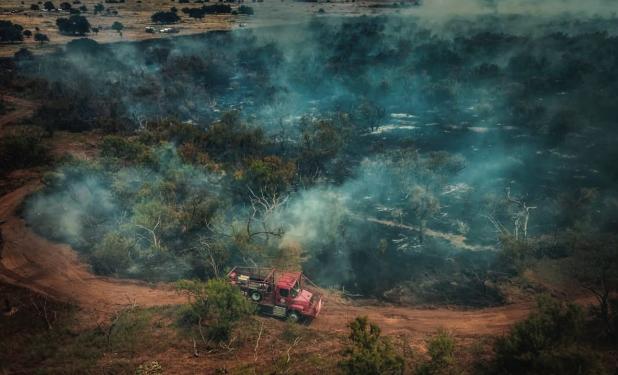
The Olney Volunteer Fire Department has been rolling out frequently in August along with fire departments across Young County. The combined forces have responded to 17 wildfires as of Aug. 24, said Jarod Cook, Young County Liaison Officer for the Texas Division of Emergency Management. Four of those calls involved mutual aid to neighboring counties, which have also sent help into Young County when needed, Mr. Cook said.
Together, the fires have burned more than 8,400 acres.
Mr. Cook warned that Monday, Aug. 24, was expected to be an “Extreme Fire Danger Day,” when the outdoor temperature was expected to reach 110 degrees Fahrenheit, and fires will be difficult to control. Additional Texas A&M Forest Service personnel and state-contracted firefighting resources are expected to be prepositioned in the area, he said.
The county remains under a 90day burn ban approved Aug. 10 by the Young County Commissioners Court. The order prohibits outdoor burning in unincorporated portions of the county through Nov. 7 unless commissioners end it earlier. Limited exceptions include certain authorized firefighter training, utility and pipeline work, certified prescribed burns, and commercial welding performed under emergency burning guidelines.
Violating the order is a Class C misdemeanor punishable by a fine of up to $500.
Mr. Cook urged residents to prevent even the smallest sparks. Trailer chains must be secured so they do not drag on pavement, and anyone using outdoor equipment should have a spotter standing by with water.
“Do your part to prevent sparks,” Mr. Cook said. “Do not throw cigarette butts out of the vehicle window.”
Olney Volunteer Fire Department Assistant Chief Jason Pack said firefighters began seeing a sharp increase in calls about two weeks ago.
“We’ve been on a call almost every day since then,” Mr. Pack said. “There’s no rain. The grass is dry — super, super dry out there.”
Heavy rains earlier in the year produced thick grass and vegetation. Record-high temperatures and a prolonged dry spell have now turned that growth into plentiful fuel for wildfires.
“There’s a lot of fuel out there,” Mr. Pack said. “The heavy winds, the low humidity and the hot temperatures — that just creates a disaster for us.”
Most of the fires involving Olney firefighters have been contained before reaching 100 acres, Mr. Pack said. The major exception was a wind-driven fire near Woodson that burned about 4,500 acres and required mutual aid.
“It was creating its own winds,” he said. “You just couldn’t get in front of it fast enough to get it shut down safely.”
So far, Mr. Pack said, firefighters have been able to protect threatened homes. A recent fire near Jermyn burned to the edge of town and came close to several blocks of houses before crews stopped it.
Mr. Pack said the grass is now so dry that firefighters conducting back burns can ignite it with the spark from an ordinary lighter, even before producing a flame.
“Anything can start it,” he said. “Just a cigarette thrown on the ground right now is starting a fire.”
The dangerous conditions come almost exactly three years after the wind-driven Campbell Ranch wildfire burned about 10,000 acres in Young and Archer Counties before local crews, aided by state and federal firefighters, could tamp it down.