
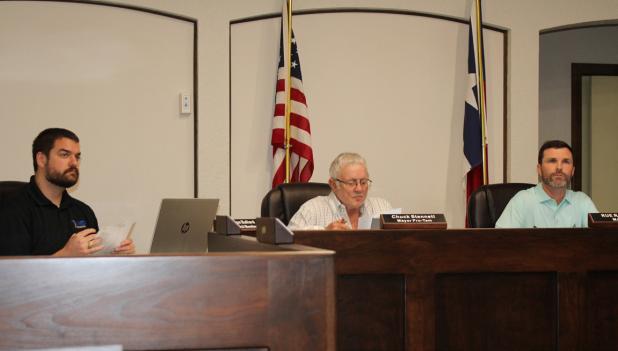
City adopts $9.2M Budget, Cuts Tax Rate
The Olney City Council unanimously adopted a $3.74 million budget for fiscal year 2026-27 and lowered the City’s property tax rate by nearly 10 cents during its Sept. 14 meeting.
The budget calls for $9.2 million in total expenditures, including about $3.74 million in the General Fund and $5.49 million in the Utility Fund to repay revenue bonds issued for the construction of a new water treatment plant, according to the final budget posted by the City.
The Council also approved a property tax rate of $0.765223 per $100 of taxable value, down from $0.862126 last year. The new rate is the City’s calculated no-new-revenue rate.
City Administrator Andy Wolfe told the Council the lower rate represents a reduction of approximately a dime from the current rate.
The no-new-revenue rate is designed to produce approximately the same amount of property tax revenue from property taxed in both years, subject to adjustments in the state formula. However, a lower tax rate does not necessarily mean that every property owner will receive a lower City tax bill because individual bills also depend on changes in taxable property values and exemptions.
The City’s taxable value rose from about $161.1 million last year to $176.8 million this year, an increase of approximately $15.7 million.
The General Fund budget, which pays for most day-to-day City services, anticipates $3,738,023.74 in revenue against $3,736,670.51 in expenses, leaving a projected surplus of $1,353.23.
The Utility Fund, which covers the City’s water and sewer operations, anticipates $5,487,170.60 in revenue and $5,487,169.48 in expenses, leaving the fund balanced almost to the penny.
The new spending plan reflects several changes discussed by the Council during budget workshops this summer.
These include increased spending on streets, parks, and equipment, as well as funds for planning improvements at Lake Cooper. The budget also anticipates expenses associated with the City’s planned new water treatment plant, one of Olney’s largest upcoming infrastructure projects.
The General Fund includes slightly higher revenue projections from building permits and municipal court fines and fees. Mr. Wolfe previously told the Council that the permit estimate reflects both anticipated construction activity and increased enforcement aimed at making sure contractors obtain required permits.
At the same time, the City took a more conservative approach to sales tax revenue, which is less directly under City control.
Another change is the elimination of a $100,000 general contingency account. Mr. Wolfe has said he prefers that unexpected major expenses be brought before the Council publicly as budget amendments rather than placing a large pool of unallocated money in the annual budget.
The new fiscal year begins Oct. 1 and runs through Sept. 30, 2027.